
Traba
TrabaBusiness
4.2848.00 Reviews
- Version
- 1.91.0
- Installs
- 100.00K
- Age Rating
- Everyone
Screenshots
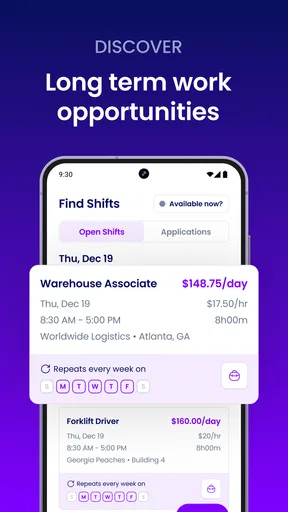
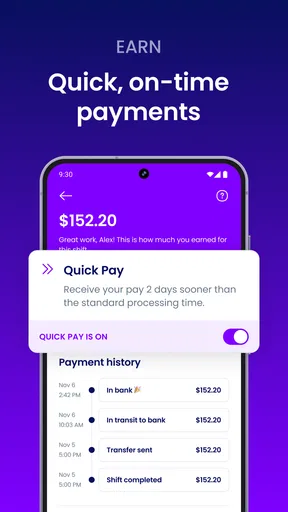
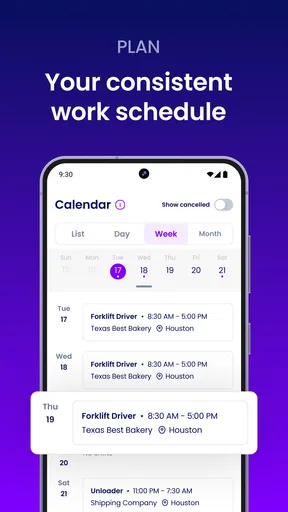
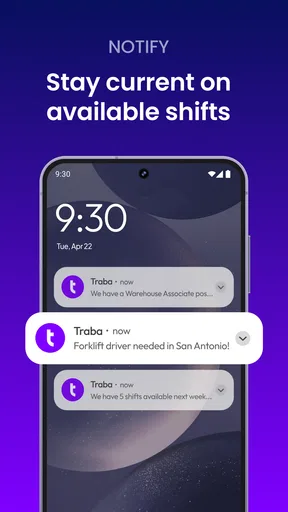
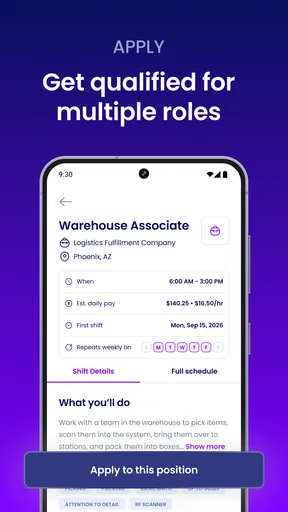
Our Review of Traba
 Analysis by Appyee
Finding work at short notice usually involves more than spotting an opening. You need to know whether the shift fits your schedule, understand what is expected, complete the application, and keep track of what happens next. I found that Traba is built around making that process more direct for people looking for flexible work. It is a free business app from Traba, and its focus is practical rather than social: connect workers with available opportunities and help them move from searching to earning.
My first impression was that the app makes the most sense for someone who does not want to commit to a traditional full-time job immediately. It can also suit people who already work but need another option around changing availability. The important distinction is that this is not a general career platform with every kind of office role. Its value depends on whether the work available through Traba matches your location, experience, schedule, and expectations.
That makes the app worth judging as a workflow rather than as a simple job board. I looked at it as a complete journey: starting with an open schedule, moving through search and application steps, dealing with the handoff between worker and employer, and finally deciding whether the result feels worthwhile. Traba is strongest when you need a practical route into flexible work, not when you want a long-term professional networking tool.
From an open schedule to a realistic work option
Imagine a normal weekday in which your regular hours have been reduced, or you are between jobs and need something that can fit around other responsibilities. The first useful question is not “What is the perfect career?” but “What work can I realistically take on?” That is the situation where Traba feels most relevant. Rather than asking you to build a polished professional identity first, the app is oriented toward finding flexible work that can match immediate circumstances.
I would approach the opening screen with a specific plan. Before browsing, I would decide which days I can actually work, how far I am willing to travel, and whether I need a single shift or a more dependable pattern. This matters because flexible work can look attractive until transport, start times, or physical demands make it impractical. The app may help surface opportunities, but it cannot turn an impossible commute into a good job.
Traba belongs to the business category and is available at no cost. It is rated for Everyone, so the app itself is presented as suitable for a broad audience, though the work you find will still have its own requirements. The developer is Traba, and the app has built a sizeable audience, with over one hundred thousand installs and a 4.2 average from around four thousand seven hundred ratings. Those figures suggest that it is more than an experimental listing, while still leaving room for individual experiences to vary.
One practical advantage of starting here is that the app can be considered before you spend time preparing a long résumé for every possible employer. That does not mean preparation is unnecessary. It means the first decision can be based on the type of work and your availability, rather than on whether you can present yourself like a traditional office applicant. For someone seeking a quick, flexible route, that lower barrier is meaningful.
How I would search without wasting time
I would not treat every visible opportunity as equally useful. My first pass would be about elimination: remove anything that conflicts with my schedule, requires travel I cannot manage, or does not match the kind of work I am prepared to do. This is a small habit, but it prevents a common mistake with flexible-work apps—applying broadly and only later discovering that the opportunity was never realistic.
The second pass would be about comparison. A shift that starts earlier may be easier to reach, while another may fit better around family responsibilities. If two options appear similar, I would favor the one with clearer practical details and a schedule I can honor confidently. The goal is not to collect applications; it is to create a dependable path from the app to an actual workday.
There is also a useful trade-off here. A broad job marketplace can expose you to more types of employment, including roles that may lead to a conventional career. Traba’s narrower focus can be an advantage when flexibility is the priority, but it may feel limiting if you are looking for specialized professional positions, remote work, or a carefully planned career move. I would skip it as my main tool if those are my central goals.
Moving from interest to application
Once I found a suitable opening, I would read it as an agreement to inspect carefully, not as a promise of easy income. I would check the timing, location, role expectations, and any qualifications before moving ahead. Flexible work is only useful when the details fit your real life. If the app makes it easy to apply quickly, that convenience should be used for better decisions, not simply more decisions.
A good workflow is to keep a short personal record of the opportunities you pursue: the role, expected schedule, location, and the point at which you applied. This is especially helpful if you are considering several options. It reduces confusion when responses arrive and makes it easier to notice whether one opportunity is becoming more concrete than another.
One non-obvious benefit of this approach is that it turns the app into a planning tool rather than a scrolling habit. I would use it at a set time, shortlist only realistic openings, and then stop browsing. That keeps the search from taking over the day and makes the next action clear. If the app is used casually, its flexibility can become indecision; if it is used with a simple routine, it becomes much more manageable.
The handoff between the app, worker, and workplace
The most important part of the experience happens after you express interest. A work app can introduce you to an opportunity, but the relationship still has to move beyond the screen. There may be communication, confirmation, preparation, and eventually arrival at the workplace. I would therefore pay close attention to every message and keep my own availability accurate instead of assuming that an application automatically means a confirmed shift.
This handoff is where expectations matter most. The app may make discovery easier, but it does not remove the need for punctuality, clear communication, or checking instructions. If a workplace needs a response, I would provide one promptly. If my circumstances change, I would update the relevant people rather than simply failing to appear. Flexible work depends heavily on reliability because each missed handoff can damage trust more quickly than it would in a long hiring process.
For a realistic example, imagine someone who has an open Tuesday and needs work while waiting for a more permanent opportunity. They browse Traba, narrow the choices to roles reachable by public transport, and apply to one that fits the available hours. The next step is not to assume the money is guaranteed. They need to watch for confirmation, make sure they understand where to go, prepare for the role, and leave enough travel time. The app helps start that chain, but the outcome depends on completing every link.
I also like the idea of separating “applied” from “confirmed” in my own notes. That distinction sounds obvious, yet it prevents a serious practical error: planning your day around an opportunity that has not actually been finalized. It is one of the most useful habits I would recommend to a new user because it addresses the real friction between a digital listing and a physical workplace.
What the result feels like in everyday use
If the process works, the result is not merely a list of jobs. It is a clearer answer to a short-term question: what work can I take, and what do I need to do next? That clarity is where Traba can be valuable. Someone who needs flexibility may not need a complex résumé database or a long application funnel. They may need a manageable selection of opportunities and a straightforward way to act on one.
The app’s free price also lowers the risk of trying it. I can explore whether it fits my situation without paying for access before I understand the available work. That does not guarantee that every opportunity will suit me, and it does not remove the normal costs of getting to work, but it makes the initial test less complicated.
Traba has been available since July 12, 2021, and the current version is 1.91.0. It supports Android 7.0 and later, which means people using older compatible Android devices may still be able to try it. I would still keep the app updated when possible, particularly for a work-related tool where communication and access matter. A job-search app is not much use if it is unreliable on the phone you depend on.
The audience size is another modest reassurance. Traba has more than one hundred thousand installs, and its review count is in the hundreds, with around eight hundred forty-eight written reviews. I would not treat popularity as proof that it will work in my area, but it does indicate that the app has attracted enough use to be evaluated by a substantial group of people.
Where the workflow can break
The biggest limitation is that flexibility is not the same as certainty. Openings may not appear when you need them, and an opportunity that looks suitable at first may fail on location, timing, requirements, or follow-up. I would not rely on Traba as my only plan if missing a shift would leave me without essential income. A second search method, direct employer contact, or another employment resource may be sensible depending on your situation.
There is also a difference between finding work and finding the right work. If your priority is a stable schedule, benefits, career progression, or a role closely connected to a particular qualification, a conventional job site may be better. Those platforms can be slower and more demanding, but they may offer a wider view of permanent employment. Traba is more appealing when the immediate constraint is flexibility rather than long-term professional positioning.
Another point of friction is personal organization. The app cannot decide whether a shift is worth the commute, whether the hours interfere with another commitment, or whether you have enough recovery time between workdays. I would compare the practical return with the full effort involved, including travel and preparation. A flexible opportunity that consumes too much unpaid time may not be as attractive as it first appears.
Users should also be realistic about communication. If you prefer a fully automated process with no need to monitor updates or respond quickly, this may not feel effortless. Work arrangements involve people, and the handoff can require attention. I would check the app regularly during an active search, keep notifications useful rather than ignoring everything, and make sure my contact details and availability remain current.
Who should try it, and who should look elsewhere
I would recommend Traba to someone who wants to explore flexible work without paying to begin, especially if they are comfortable taking responsibility for schedule checks and follow-up. It is a sensible option for people whose availability changes, workers looking for an additional source of income, and job seekers who want a more immediate starting point than a lengthy corporate application process.
I would be more cautious about recommending it to someone who needs a guaranteed number of hours, a specific professional track, or a remote role. It is also not the right first choice for a person who dislikes uncertainty around shifts or who cannot easily manage last-minute changes in plans. In those cases, a direct employer relationship or a traditional employment platform may provide the structure they need.
My strongest advice is to use Traba with a defined weekly objective. Decide whether you are looking for one shift, several flexible opportunities, or a bridge while pursuing permanent work. Then judge the app by whether it helps you complete that objective, not by how many listings you can browse. This keeps expectations grounded and makes the app’s strengths easier to recognize.
After using it as a complete workflow, I see Traba as a focused tool for turning available time into possible work, with the most value appearing when you approach each opportunity carefully. Its free access, broad age rating, established presence, and flexible-work focus make it easy to test. The 4.2 average rating is encouraging, but the real question is whether the opportunities shown fit your location and routine.
I would keep it installed if I were actively looking for flexible work and willing to manage the handoffs myself. I would not treat it as a replacement for every kind of job search, and I would keep another option available if income needs were urgent. Used with realistic filters, a personal application record, and careful confirmation before making plans, it can make a frustrating search feel more organized. That is a practical benefit, and for the right worker, it may be enough reason to give Traba a try.
Verdict
Strengths of Traba
- Fast access to local hourly job opportunities
- Clear shift details, pay rates, and workplace information
- Useful filters help match jobs to your availability
- In-app communication simplifies contact with employers
- Can help workers build experience through short-term shifts
Limitations of Traba
- Job availability varies considerably by location
- Some shifts may be claimed before you can apply
- Requires accurate profile and work history information
- Hourly work may offer limited stability or benefits
- App features and support can differ by market
Similar Picks in This Category
View All
LinkedIn: Community & Network
LinkedIn3.8

Zoom Workplace
zoom.com4.1

Microsoft Teams
Microsoft Corporation4.6

Meta Business Suite
Meta Platforms, Inc.4.6

Webex Meetings
Cisco Systems, Inc.4.5

TeamViewer Remote Control
TeamViewer4.4
Frequently Asked Questions
What is Traba and how does it work?
Traba is a staffing and job marketplace app designed to connect businesses with hourly workers for temporary, flexible, or shift-based jobs. After creating a profile, workers can browse available opportunities, review details such as location, pay, schedule, and requirements, and apply for suitable shifts. Employers use the platform to find and manage workers for their staffing needs.
Who can use the Traba app?
Traba is mainly intended for hourly workers looking for flexible employment and for businesses that need staffing support. Worker eligibility can depend on the city, available positions, age requirements, work authorization, experience, and other job-specific conditions. Because availability varies by location, some users may find fewer opportunities or may not be able to register in areas where Traba does not currently operate.
What types of jobs are available through Traba?
The jobs offered through Traba generally focus on hourly and operational work, including warehouse, logistics, manufacturing, fulfillment, event, and other frontline roles. Each listing may have different requirements involving physical activity, previous experience, transportation, safety training, or shift availability. Before accepting a position, carefully read the complete listing so you understand the duties, workplace expectations, and schedule.
How are payments handled on Traba?
Payment details can vary according to the job, employer, location, and applicable employment arrangements. The app typically displays compensation information for available shifts, helping workers compare opportunities before applying or accepting work. However, users should review the payment schedule, required timekeeping procedures, deductions, and any applicable policies carefully. Do not assume that every role follows the same payment timing or method.
Is Traba safe and worth downloading?
Traba can be useful for people seeking flexible hourly work, especially those who want to discover shifts through a mobile platform rather than traditional job searches. As with any employment app, protect your personal information, use only official download links, and communicate through legitimate in-app or company channels. Check employer details, workplace instructions, cancellation rules, and user reviews before committing to a shift.
